Btrax Design Company > Freshtrax > Beyond Convenie...
Beyond Convenience: What FamilyMart’s First Flagship Store Reveals About Brand Growth in Japan
If you’ve ever visited Japan, chances are you’ve stepped into a convenience store, known as konbini in Japanese, at least once.
But Japanese convenience stores are much more than places to grab a quick meal or drink. From ATMs and bill payments to package delivery and ticketing services, they have become an essential part of everyday life in Japan.Yet the market has reached maturity.
With more than 50,000 convenience stores operating across the country, there is increasingly limited room for growth through new store openings alone. This was the strategy that helped fuel the industry’s expansion for decades.
The question is no longer simply how many more stores can you open, but how much more value can you create from each store and from the brand itself?
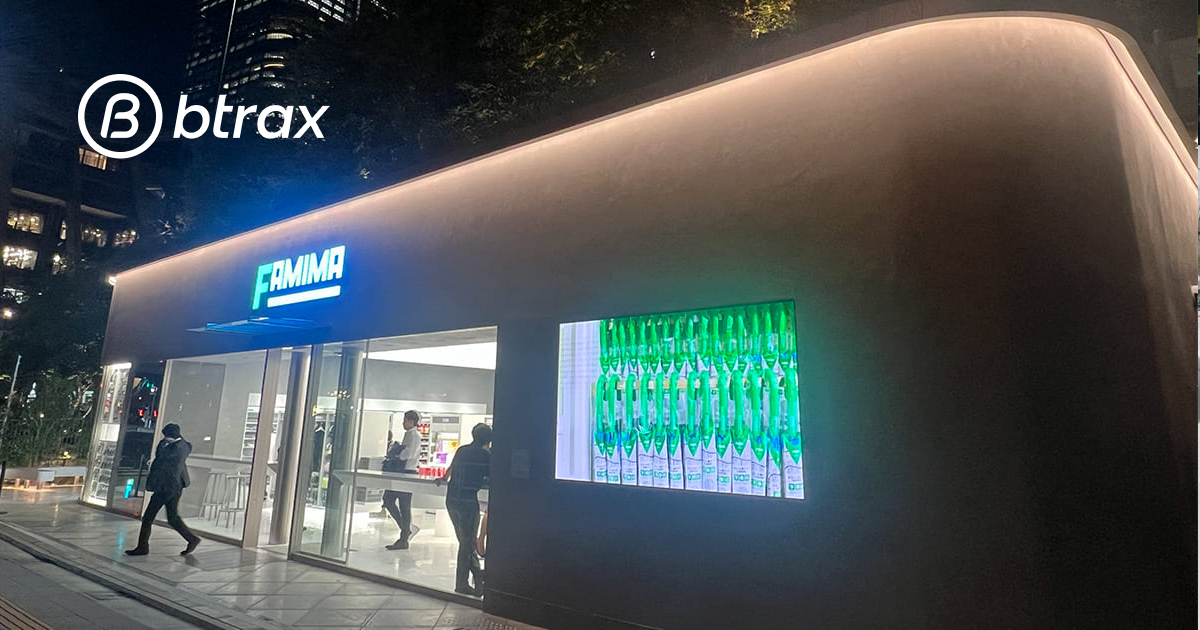
FamilyMart is betting on one answer.On July 10, 2026, the company opened its first-ever flagship store, FAMIMA PARK AZABUDAI, in Tokyo’s Azabudai district. This isn’t simply a more premium version of a convenience store.
FamilyMart is attempting something much more ambitious: rethinking what a convenience store can be.
And its approach offers valuable lessons for global companies looking to enter Japan or build a stronger, more relevant brand in the Japanese market.
FamilyMart Fights Back in a Mature Convenience Store Market
Japan’s convenience store industry has long been dominated by three major players: 7-Eleven, FamilyMart, and Lawson. But as the market matures, the nature of competition is changing.
The challenge is no longer just about opening more locations. It is about increasing sales per store and, perhaps more importantly, giving customers a compelling reason to choose one brand over another.
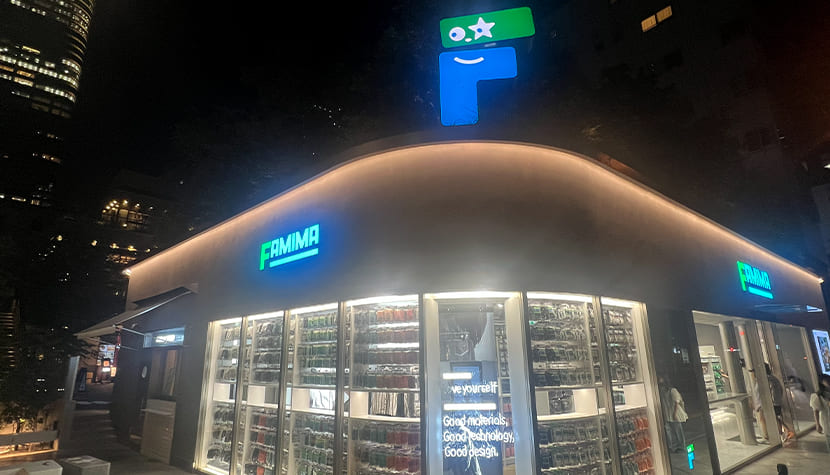
Against this backdrop, FamilyMart launched the “Next FamilyMart Project” in 2026, marking the company’s 45th anniversary. As part of the initiative, the company introduced a new brand, FAMIMA, to explore what the next generation of convenience stores could look like.
FAMIMA PARK AZABUDAI is the most visible expression of that ambition.
From “It’s Convenient” to “I Want to Go There”
For decades, the greatest value offered by convenience stores has been right there in the name: convenience. They are nearby. You can quickly find what you need. You can get in and out within minutes.
But when convenience stores are everywhere and competing chains all offer increasingly high levels of product quality and service, convenience alone becomes much harder to differentiate on.
FAMIMA PARK AZABUDAI adds two new dimensions to the equation: experience and discovery.
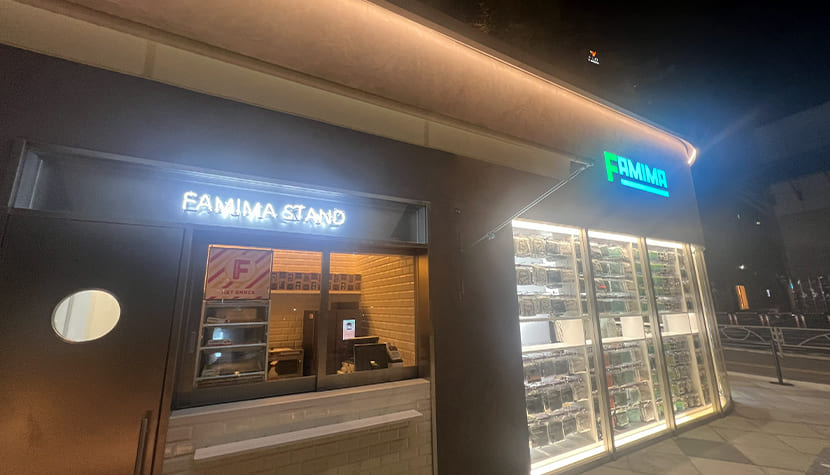
Outside the store, for example, the FAMIMA STAND lets customers purchase coffee and other items without even entering the building. Benches create space to sit and spend time, while a lush “Rooftop Forest” adds another unexpected element to the experience.
Traditional convenience stores are largely designed around one assumption: customers come in, buy what they need, and leave. Here, FamilyMart is creating reasons to stay.
It represents a shift from “I’m stopping by because I need something” to “I’m going because I might discover something interesting.”
FamilyMart isn’t just redesigning the store. It is attempting to redefine the relationship between customers and the convenience store itself.
Breaking the Rules of Convenience Stores with World-Class Creatives
One of the driving forces behind this transformation is FamilyMart’s collaboration with external creative talent.
NIGO®, one of Japan’s most influential figures in fashion and street culture, is involved in the creative direction of FAMIMA. The store’s spatial design was led by Masamichi Katayama of Wonderwall®, known for creating retail spaces for major global brands.
FamilyMart’s “Convenience Wear” apparel line, meanwhile, was co-developed with fashion designer Hiromichi Ochiai.
What matters here isn’t simply that FamilyMart brought in famous designers.
It’s that the company is combining decades of expertise in running convenience stores with perspectives from outside the convenience store industry.
The longer a company operates in a particular industry, the more “rules” it inevitably develops. The checkout counter belongs here. Products should be displayed this way.
Convenience store products should fall within a certain price range. Customers should spend as little time in the store as possible.
Those assumptions can create highly efficient operations. But they can also become constraints when a company tries to imagine an entirely new customer experience.
FAMIMA PARK AZABUDAI challenges those assumptions one by one.
Making “Buying Clothes at a Convenience Store” Part of Everyday Life
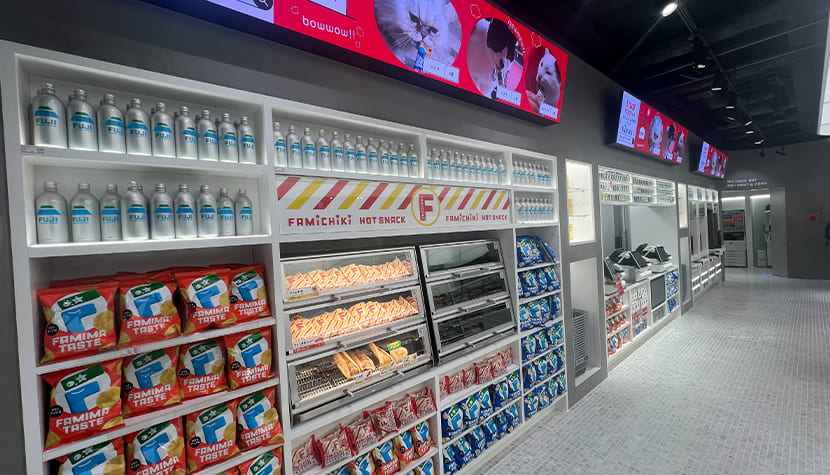
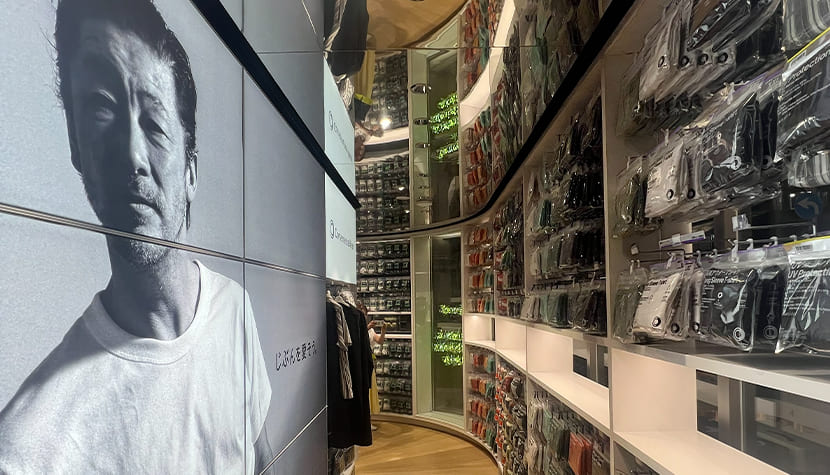
Apparel is perhaps the clearest example. FAMIMA PARK AZABUDAI features a major dedicated space for FamilyMart’s Convenience Wear line. It even has something almost unheard of in a convenience store: a fitting room.
But the fitting room is only part of the story. Customers can also use an interactive digital touchscreen that recommends full outfits and receive guidance from dedicated staff.
In other words, FamilyMart isn’t simply selling clothes inside a convenience store. It is bringing elements of the fashion retail experience into the convenience store itself.
The ambition behind Convenience Wear is to make buying clothes at a convenience store a natural part of everyday life.
That offers an interesting lesson in how new demand can be created within a mature market. You don’t necessarily need to invent an entirely new product category.
By placing familiar products in a different environment, experience, and context, companies can encourage entirely new consumer behaviors.
Turning “I Need It” Into “I Want It”
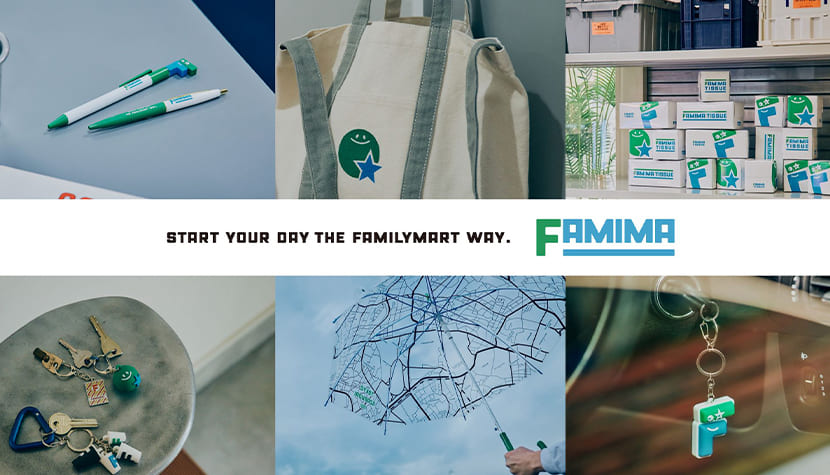
The same thinking can be seen in FAMIMA’s lifestyle goods. The lineup includes drink bottles, cushions, and other items that would traditionally feel somewhat out of place in a convenience store.
One particularly interesting example is a clear vinyl umbrella featuring a map of Azabudai. Convenience store umbrellas are normally the definition of a necessity purchase.
It starts raining. You don’t have an umbrella. So you buy one at the nearest convenience store. But add thoughtful design and a story connected to the location, and the equation changes. A product customers buy because they need it can become something they buy because they want it.
This distinction is particularly important for brands operating in mature markets.
Growth doesn’t always require creating an entirely new market.
New demand can also be created by giving new meaning to products and behaviors that already exist. FamilyMart’s experiment offers a clear example of how that can work.
Reinventing Convenience Store Food, Too
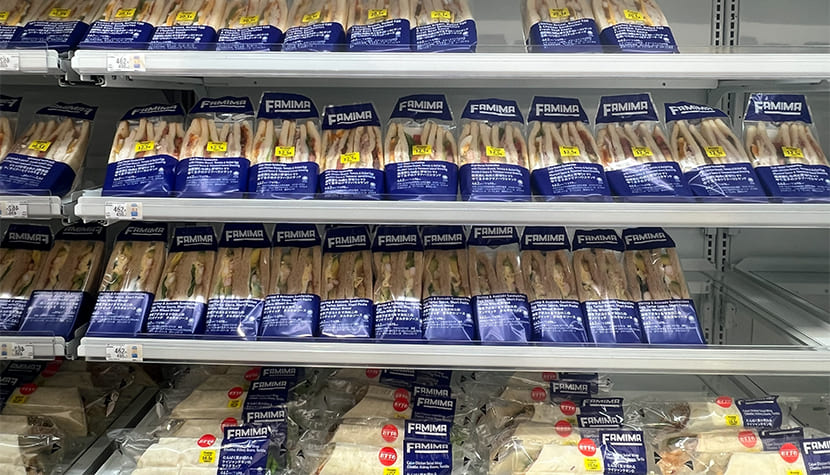
The transformation goes beyond the store design and apparel. Reflecting the character of Azabudai and its urban customers, FAMIMA PARK AZABUDAI offers grab-and-go deli items and salads designed around modern city lifestyles.
It also serves specialty coffee co-developed with Tetsu Kasuya, a World Brewers Cup Champion, as well as freshly prepared tea drinks extracted to order using an espresso machine.
Again, the point isn’t simply that the food is “premium for a convenience store.”
What’s more interesting is how FamilyMart has considered who uses this particular location and localized the products, space, and services around those customers.
That idea is particularly relevant for global brands entering Japan.
Knowing Your Own Business Best Can Be Both a Strength and a Weakness
FAMIMA PARK AZABUDAI also highlights another important lesson: the value of working with external partners.
Naturally, no one understands a company’s products, customers, and operations better than the company itself.That institutional knowledge is an enormous advantage.
But deep expertise in your own business and industry can also make it difficult to step outside established assumptions.
What kinds of customer experiences are emerging in other industries? How are younger consumers changing the way they interact with brands? How is the relationship between brands and customers evolving in other markets? These perspectives can be difficult to develop entirely from within an organization.
That is why FamilyMart’s collaboration with specialists from fashion, architecture, design, and culture is significant. The role of an external partner isn’t simply to fill a gap in internal resources or capabilities.
It can also be to challenge a company’s assumptions from the outside and reveal possibilities that may be difficult to see from within.
What Global Brands Can Learn from FamilyMart’s Approach
The same principle applies to international companies entering the Japanese market. Successfully expanding into Japan requires more than translating a global website, advertising campaign, or brand message into Japanese.
What do Japanese consumers expect from a brand? What information gives them confidence when making a purchase? What kinds of designs resonate locally? Where and how do consumers discover new brands?
Building a meaningful presence in Japan requires understanding these local contexts and designing the brand experience around them. But there is another important distinction.
The goal shouldn’t simply be to change a global brand to make it “more Japanese.”
FAMIMA PARK AZABUDAI brings together convenience retail, fashion, architecture, and culture. In a similar way, global companies should look for the intersection between:
what makes their brand successful globally × insights unique to the Japanese market.
That intersection can become the foundation for a brand experience that feels relevant to Japanese consumers without losing what made the brand distinctive in the first place.
Creating New Brand Experiences Through Global × Local
With offices in San Francisco and Tokyo, btrax has worked across a wide range of projects, from helping startups develop their Japan go-to-market strategies to supporting global companies with localization, branding, and marketing in Japan.
Working across different industries and markets allows an agency to look beyond the assumptions of any one company or sector and bring together insights from different case studies, consumer trends, and cultural contexts.
Japan has its own distinct business practices and consumer expectations, but it also remains a market with significant potential for global companies. As FAMIMA PARK AZABUDAI demonstrates, a mature market does not mean there is no room left for innovation.
Look at existing products from a different perspective. Bring in knowledge from other industries. Collaborate with external partners.
And create new experiences around the needs and expectations of local customers.
By doing so, even something as familiar and established as the Japanese convenience store can take on an entirely new meaning.
For global companies considering entering Japan or looking to strengthen their branding and localization strategy here, the same question is worth asking:
What new value could you create by combining the strengths of your global brand with the culture and customer insights unique to Japan?
FAMIMA PARK AZABUDAI offers a compelling case study for exploring that question.
Japan GTM for AI Startups
Build trust, connect with decision-makers, and accelerate your Japan market entry through events, community, and localized GTM execution.
New articles